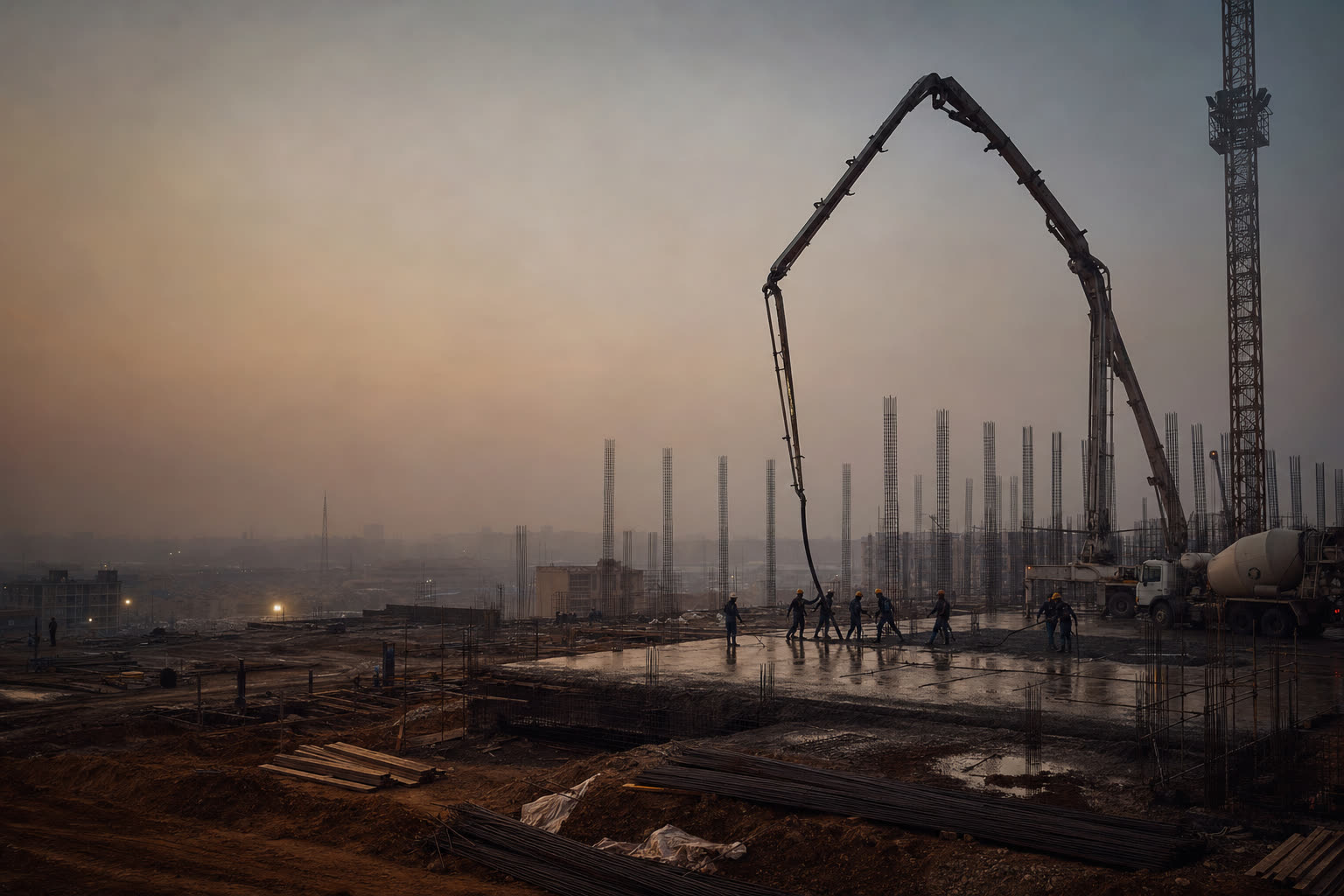
Identify opportunities before they become bottlenecks.
PlanetaryPixels helps organizations see what's building — in workflows, programs, and operations — before it turns into a problem that costs time, money, or people.
We don't start with robots, AI, or software.
We start by understanding where the friction is.
Then we determine what, if anything, should be done about it.
The patterns show up before the problems do.
Across construction programs, infrastructure operations, and large-scale project organizations, the same kinds of pressure keep appearing. They don't start as crises. They start as friction.
Demand is growing faster than the available workforce.
More projects, more scope, tighter schedules — and a workforce that is not growing at the same pace. Organizations that don't address this structurally will keep running the same deficit.
Repetitive work is consuming skilled labor.
When experienced people spend their time on tasks a well-designed process or a simple tool could handle, the organization is trading its highest-cost resource for its lowest-value output.
Worker exposure increases under schedule pressure.
The activities that carry the most physical risk tend to get squeezed hardest when schedules slip. That combination is predictable. So is the result.
Information is trapped in meetings, spreadsheets, and disconnected systems.
Organizations generate large amounts of data about how work is going. Very little of it reaches the people who could act on it — in time to act on it.
Opportunities stay hidden until they become bottlenecks.
The clearest sign that something needed attention six months ago is what's happening on your program today. Most constraints are visible earlier, if you know where to look.
The pressure isn't temporary.
Demand on construction and operations organizations is structural, not cyclical. The conditions that make these patterns matter aren't going away.
Demand is structural.
Infrastructure, data center, industrial, and energy programs are accelerating at the same time. The work is not slowing down.
Labor is constrained.
The available skilled workforce is not expanding at the rate the work requires. Every program is competing for the same crews.
Schedules are compressed.
Owners need projects in place faster. The room that used to absorb friction at the end of a program isn't there anymore.
Expectations are higher.
Safety, quality, and accountability standards continue to tighten — and rightly so. The cost of meeting them with the current operating model is climbing.
None of this is a reason to panic. It's a reason to be more deliberate about what gets attention first.
A perspective from outside any one silo.
Lane Yago has worked inside design, construction, operations, maintenance, automation, robotics, workflow, quality systems, and program execution — not in sequence, but often simultaneously across large, complex programs.
Most recently, he completed a seven-year contractor engagement with Google, with visibility across multiple data center general contractors, campuses, regions, leadership teams, workforce initiatives, safety programs, commissioning efforts, and operational reviews at the same time.
That kind of cross-domain view is hard to get from inside a single organization. When you're running a program, you see your program. When you've been across many programs and many functions at once, the patterns become clearer.
That's what PlanetaryPixels brings to an engagement: the ability to recognize what's building before the people inside the organization can see it clearly.
Six ways to get ahead of the problem.
Every situation is different. The starting point is always the same: a clear look at what's actually happening, and why.
Operational Assessments
A structured review that identifies opportunities, constraints, risks, and inefficiencies across your operations — before they compound. Applies across industries and program types. This is typically where we start.
Learn more → 02Construction Capacity Assessment
The operational assessment applied specifically to construction and infrastructure programs. Focused on labor, schedule pressure, workflow, and execution gaps in construction-specific environments.
Learn more → 03Workflow Improvement
A close look at how work and information move through your organization — where decisions stall, where steps pile up, where teams are doing by hand what the process should be doing for them. The right fix is sometimes process redesign, sometimes organizational, sometimes a tool. We figure out which before recommending anything.
Learn more → 04Automation & Robotics Advisory
An evaluation of whether automation makes sense for specific activities in your operation — and if so, which ones, in what order, under what conditions. Not a pitch for any technology. A structured way to answer the question.
Learn more →Program & Process Reviews
A focused review of a specific program or process — how it was designed, how it's actually running, and what the gap between those two things is costing. Often used before a major phase change or when performance has diverged from plan.
Practical AI in Operations
Where AI tools have a real, practical role in how an operation runs — used as a specific answer to a specific workflow problem, not as a strategy initiative. We help identify when it fits, what implementation looks like, and what it would actually change.
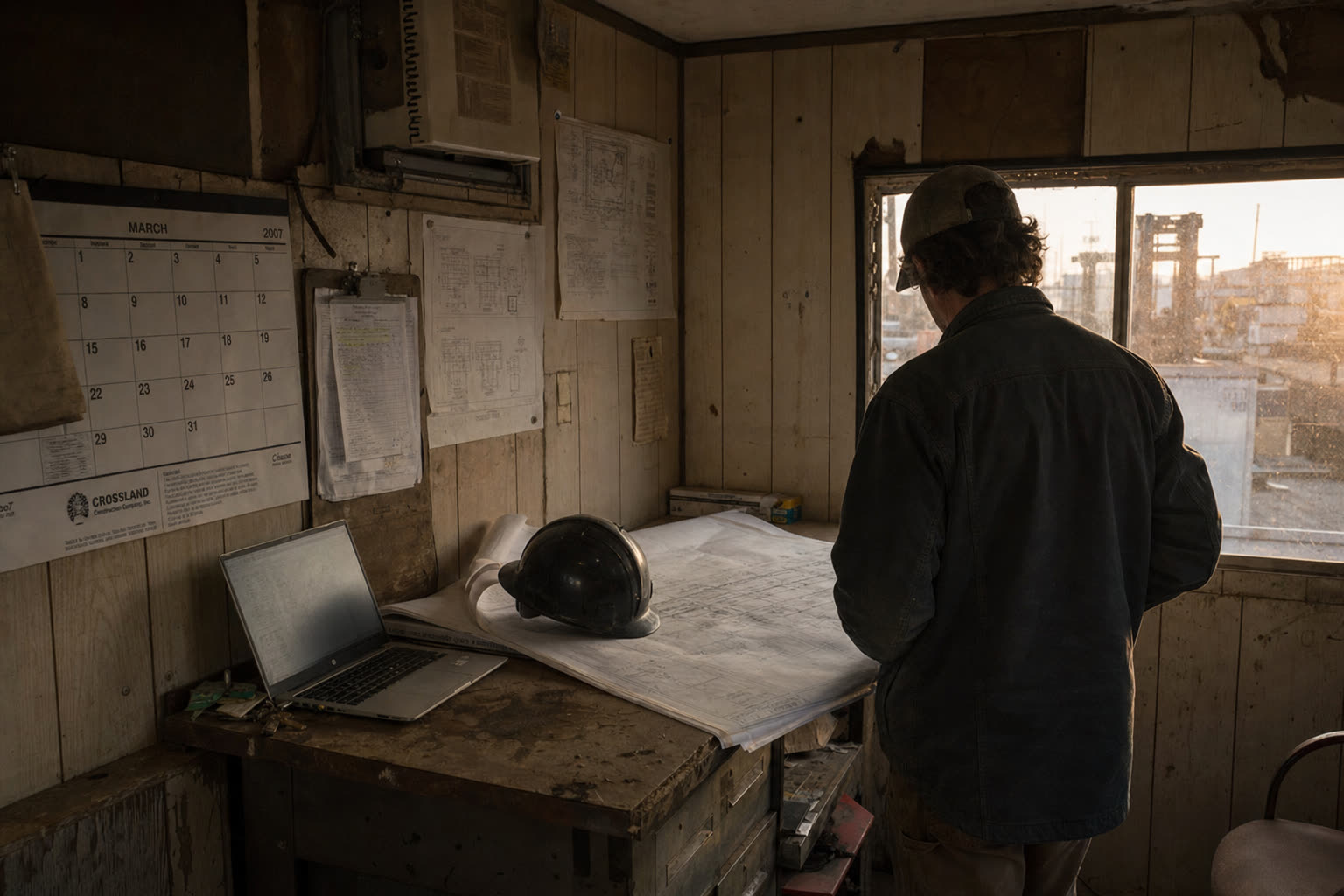
Built from the field up.
Lane Yago founded PlanetaryPixels over a decade ago. His background spans robotics, automation, design, construction, operations, maintenance, quality systems, and program execution.
Over the past several years, he supported initiatives involving data center design, construction program support, operations, maintenance, reporting, workforce initiatives, and cross-functional program activities — with visibility across a breadth of organizations, geographies, and program types at the same time.
That cross-domain perspective is the foundation of the work at PlanetaryPixels.
If any of this matches what you're seeing, it's worth a conversation.
We take on work where the fit is clear. If what you're dealing with lines up with what's described here, send a note. You'll get a direct read on whether we can help.