Automation & Robotics Advisory
The question isn't whether automation exists for your activity type. It's whether it's the right answer for your specific situation.
You've seen the pitch. You haven't had a way to evaluate it.
Automation and robotics vendors will tell you their product solves your workforce problem. Maybe it does. It may also add a new set of operational complexity, deployment challenges, and costs that weren't in the demo.
The challenge isn't that automation doesn't work on construction sites or in operations environments. Some of it works very well, on the right activities, under the right conditions. The challenge is that most organizations don't have a rigorous way to evaluate which of their specific activities are real candidates — and which aren't.
Without that framework, you're making a procurement decision before you've made an operational one. That's usually how you end up with equipment that runs for a few months and then sits.
The first question is whether automation is the right answer at all for a given activity. Often it isn't. Often the better answer is a process change or a workflow fix that removes the problem the automation was meant to solve. Knowing which is which matters.
We start with your activities, not with available technology.
Every evaluation starts with the operational picture. We look at the activities your crews or teams are actually performing — not in theory, but on your programs.
We evaluate each activity against a set of criteria: repetitive, physically demanding, high exposure, time-consuming, prone to rework or quality variance. Activities where removing the task from a person reduces both risk and cost — and where reliable technology exists to do it under your specific conditions.
From there, we assess feasibility: site conditions, program sequencing, workforce impact, deployment timeline, and total cost of ownership. Not just sticker price.
The output is a prioritized list of candidates with a clear rationale for each — and a recommended path forward that reflects your program's actual conditions. Where automation is not the right answer for a given activity, we say so and explain why.
Places where the automation question comes up most often.
The relevant candidates depend on your program type and activity mix. These are the areas where the question tends to arise on large construction and infrastructure programs:
- 01Concrete work
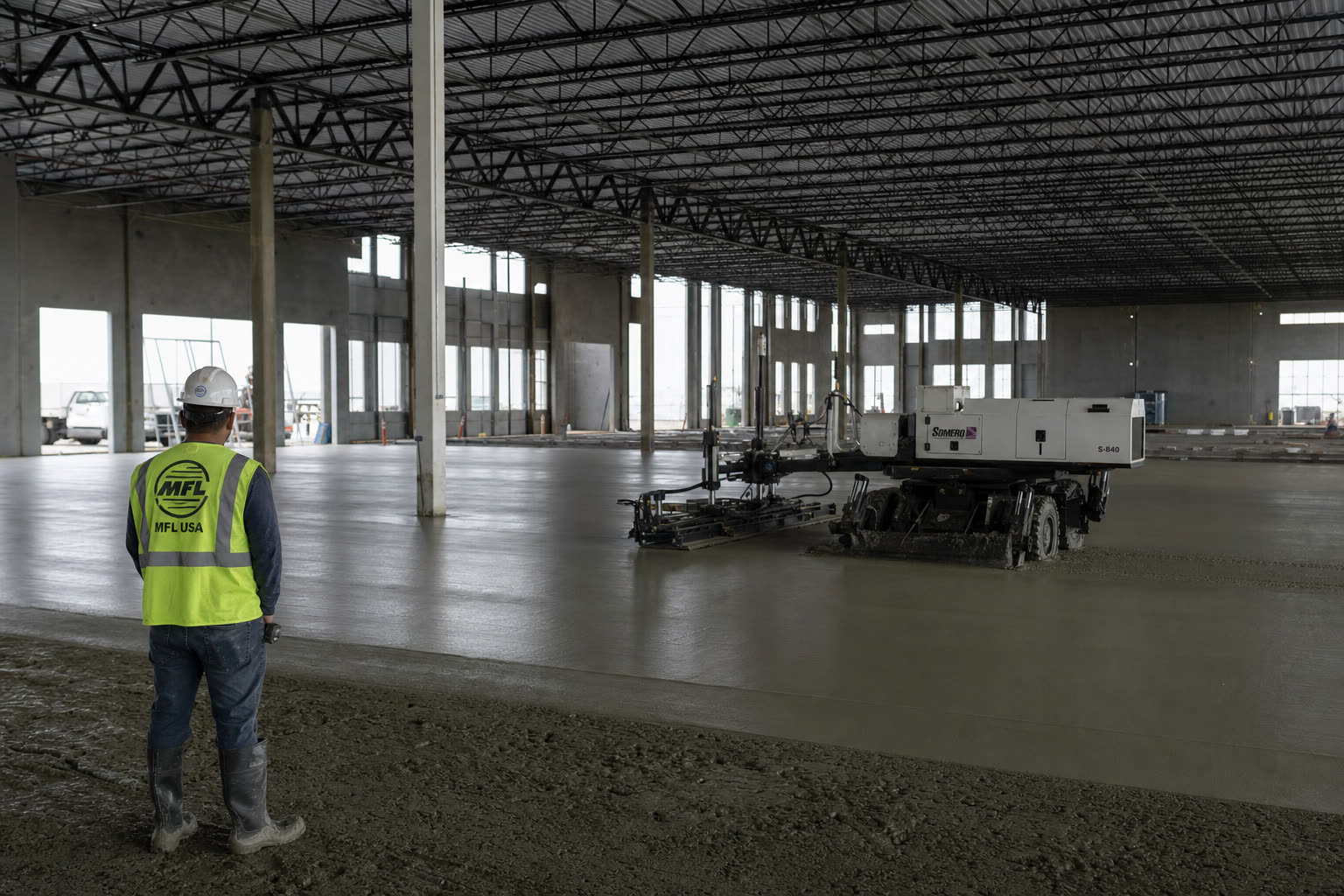
Finishing, screeding, and layout on large floor slabs. One of the most labor-intensive and physically demanding activities on a data center or warehouse program. Robotic options exist for the right site conditions and are worth evaluating before committing to a conventional approach.
- 02Surveying and layout
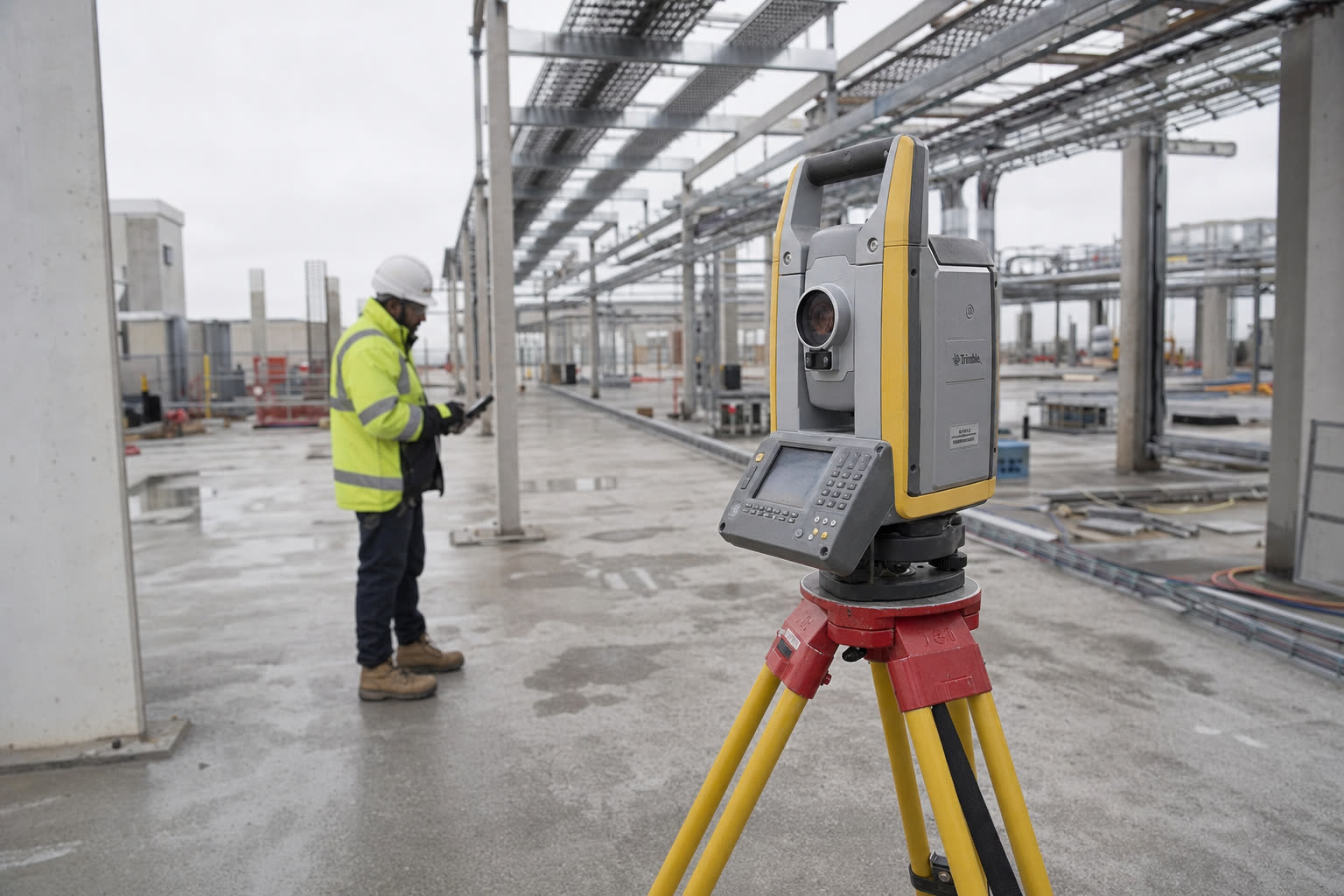
Automated total stations and layout systems can execute layout work faster and with more consistency than manual methods on large programs. Reduces rework and frees skilled surveyors for work that genuinely requires judgment.
- 03Materials movement and internal logistics
Moving materials from lay-down areas to point of installation on large sites is a significant source of unproductive labor hours. Autonomous or semi-autonomous movement options exist and are worth evaluating based on site configuration.
- 04Inspection and monitoring
Autonomous inspection platforms — aerial and ground-based — can monitor compliance, track progress, and document conditions without pulling people off productive work. The question is whether the data they produce is actually used.
- 05Rebar placement and structural assembly
Robotic applications for rebar tying and placement are production-ready for specific configurations. Worth evaluating on large-volume work.
- 06Safety monitoring and EHS
Sensor and computer vision systems that track exposure events in real time. Useful when manual observation coverage is limited and when the underlying workflow can support the data generated.
This is not an exhaustive list. The right candidates for your program depend on specific activity types, conditions, and organizational readiness.
A clear-eyed answer to which activities are worth pursuing — and which aren't.
Organizations that go through this process leave with:
- A clear inventory of automation-eligible activities on their programs, ranked by impact and feasibility
- A vendor-agnostic evaluation framework they can apply to future programs
- A deployment path that accounts for program sequencing and workforce transition
- An honest assessment of where automation is not the right answer — and what is
The goal is not to automate for its own sake. The goal is to take unnecessary physical burden off crews, reduce exposure, and help programs move forward with the workforce already available — when automation genuinely supports that goal.
If you're not sure whether automation is the right answer for a specific activity, that's the right question to bring us.
We'll look at the activity, the conditions, and the alternatives — and give you a straight answer.